

Is It Safe to Meet People on a Cruise? The Honest Version
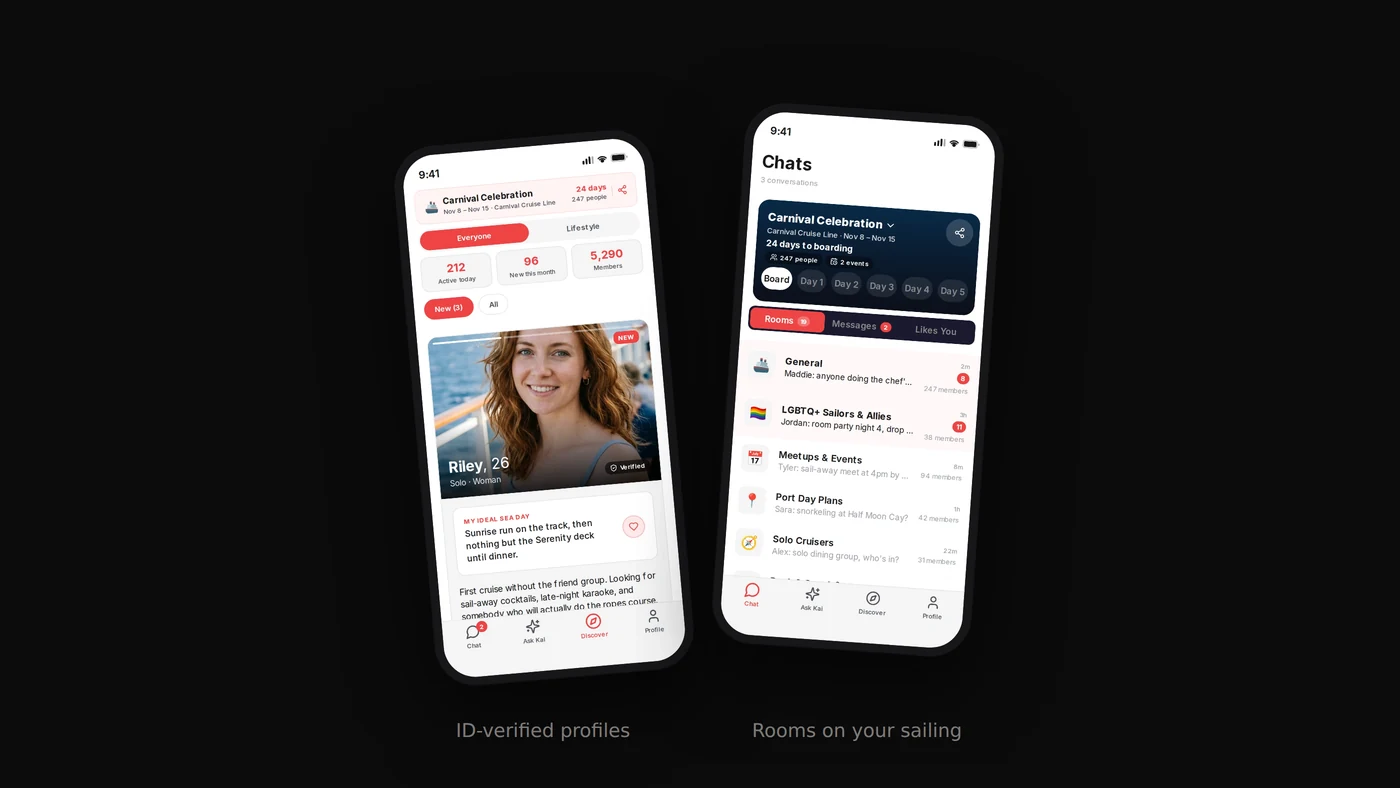
Quick answer: Mostly yes, and a cruise is safer than many places you could meet a stranger, because the passenger list is closed, security staff are aboard, and public areas are covered by cameras. Two things make it different from meeting someone in a city, and both cut the same way: you cannot leave, and you will see the person again tomorrow. That argues for verifying who someone is before you board, keeping first meetings in public venues, and being careful with alcohol and cabin invitations.
What is genuinely safer about a ship
A cruise is a closed environment, and that helps more than people expect. Everyone aboard passed a check-in with a passport or government ID against a manifest. Nobody wandered in. The passenger list is finite and known to the line. Public areas have security cameras and the ship carries security personnel. If someone behaves badly, there is an authority aboard who can restrict their access, and a record of who they are.
Compare that to meeting a stranger from a general dating app in a city, where the person could be anyone, from anywhere, with no accountability after they walk away. On that comparison, the ship wins.
What is genuinely riskier
Three things, and they are structural rather than a matter of bad luck.
- You cannot leave. A date that goes wrong on land ends when you go home. On a ship, you and that person share a few hundred metres of hull for the rest of the week. There is no going home early.
- The social circles overlap completely. The person you had an awkward night with is at breakfast, at the pool, and at your dinner seating. On a mainstream ship there may be thousands of passengers, but you will move through the same handful of venues.
- Alcohol is everywhere and often prepaid. Drinks packages remove the natural brake of paying per drink. Most incidents reported aboard ships involve heavy drinking and a private cabin rather than a stranger lurking in a corridor.
The verification gap
The single biggest variable is whether anyone checked that the person is who they say they are before they could message you.
On a Facebook roll call, a Reddit thread, or an app where signup is an email address, nobody did. A profile photo proves nothing, and an account being old proves only that the account is old. That is the same exposure you would have anywhere, imported onto a ship where you cannot walk away from the consequences.
Identity verification changes the population before you ever interact with it. Nautir requires a government ID scan before you can like, match or message anyone. In the last quarter measured, 60 percent of people who started a signup never made it past that gate, including 14 percent who reached the ID scan itself and abandoned it. Most companies would call that a churn problem. On a ship, it is the point. Those are people who would have been in your messages on any platform that does not ask.
Worth being precise, because several apps now use the word verified and do not mean the same thing. AI age estimation looks at a selfie and guesses whether you are an adult. Booking verification confirms someone holds a reservation on that sailing. An ID scan checks a real document against a real face. All three are useful. Only the last one tells you who the person is.
Precautions that actually remove risk
- Do the talking before you board. A week of conversation before embarkation tells you far more than an hour at the sail-away party, and it costs you nothing to walk away from someone who reads wrong while you are still at home.
- Keep it in the app until you have met. Moving to WhatsApp hands over your phone number, which is tied to a lot more of your life than a profile is. There is no rush.
- First meeting in a public venue, always. A bar, the pool deck, a show, the atrium. Never a cabin, and never a quiet deck at night for a first meeting.
- Tell someone your plan. A friend at home or a fellow passenger should know who you are meeting and where. On a ship you can also simply text your dinner group.
- Own your drink. Watch it poured, keep it with you, and treat a drinks package as unlimited access rather than an obligation.
- Be careful on port days. Off the ship you lose every structural protection the ship gave you: no security staff, no cameras, no manifest, and a foreign jurisdiction. Go ashore in a group, and know the all-aboard time.
- Report early. Guest services and ship security can act, and they can only act on what they know. Ask for it in writing.
The part people underrate
Privacy on a ship is not a nice-to-have, it is a safety feature. A screenshot of a private conversation circulating among two thousand people you cannot get away from is a genuinely bad week. So is a conversation that outlives the sailing when you wanted it to end at the gangway.
Nautir is built around that constraint: screenshot blocking, view-once photos, private password-protected rooms, discovery bounded to your own sailing, and chats that lock when the cruise ends. Not because a week at sea is dangerous, but because it is small, and small places are unforgiving of things that leak.
FAQ
Is it safe to meet people from a cruise app before you board?
Chatting before you board is the safe part and is generally safer than meeting a stranger at home, because the pool is small and everyone has a verifiable reason to be there. The risk shifts once you are aboard, where you cannot leave and you will keep running into the person. Prefer platforms that verify identity, keep early conversation in the app, and meet first in public areas of the ship.
Are cruise ships safe for solo travelers?
Cruise ships are, on the whole, a controlled environment with security staff, cameras in public areas, and a closed passenger list, which makes them safer than many solo travel options. The specific risks that do exist are alcohol-related incidents, cabin invitations, and port days off the ship, and those are where precautions matter most.
What is the biggest safety risk when meeting people on a cruise?
Alcohol combined with a private space. Most incidents reported on ships involve heavy drinking and a cabin, not a stranger in a corridor. Keeping first meetings in public venues and staying in control of your own drink removes most of the exposure.
Can you be catfished on a cruise app?
On any platform where signing up requires only an email address, yes. Identity verification is the thing that changes it. Nautir requires a government ID scan before you can like, match or message anyone, and 60 percent of people who start a signup never clear it. Facebook roll calls, Reddit posts, and apps with email-only signup filter none of those people.
What should I do if someone makes me uncomfortable on board?
Report it to guest services or ship security immediately and ask for it to be logged in writing. Ships have security staff and can restrict a passenger. Block and report the person in whatever app you met on. Do not wait until the end of the sailing to raise it.